Movement
Quartz
A battery and a vibrating crystal — cheap and precise.
- Typical accuracy
- Typically ±15 seconds per month; high-accuracy quartz to a few seconds per year.
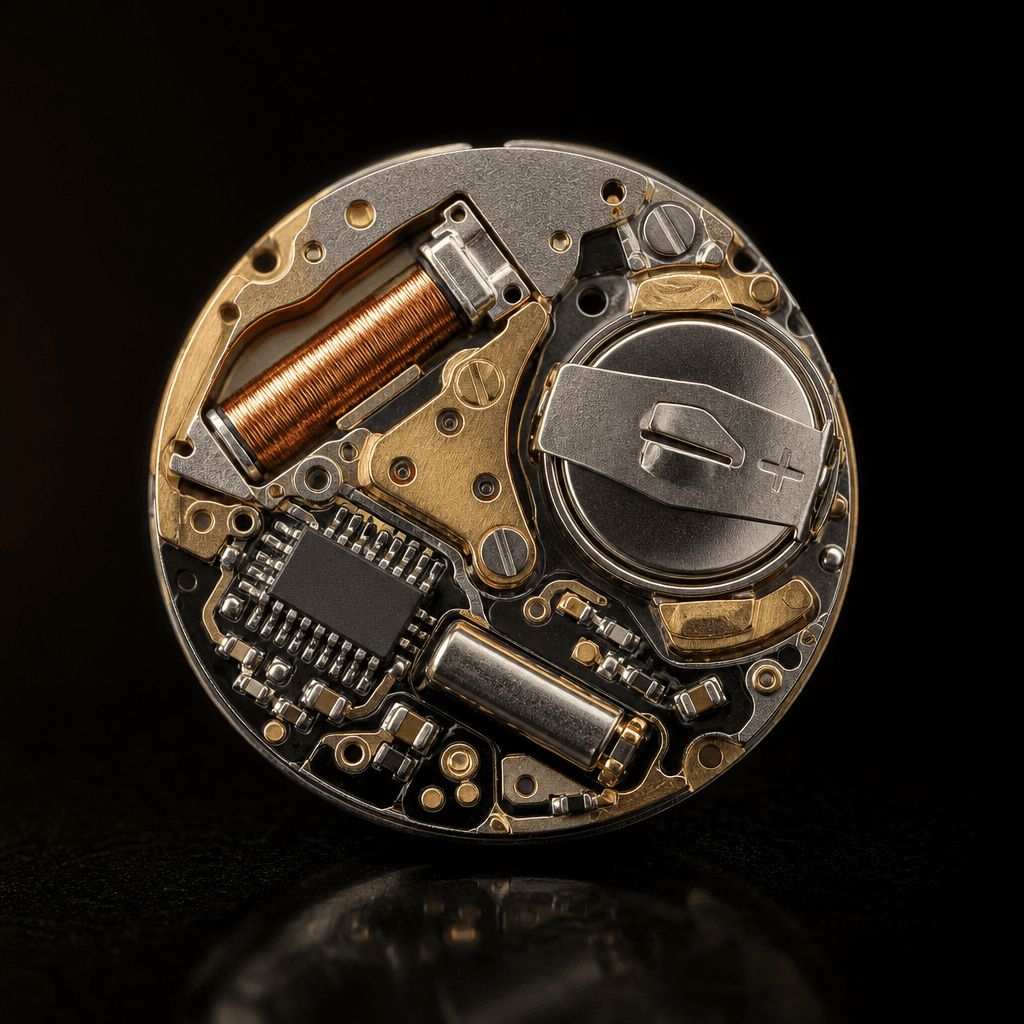
How it works
A battery sends current through a quartz crystal that vibrates exactly 32,768 times per second. A circuit counts those vibrations and pulses a tiny motor once per second, ticking the hands forward. Few moving parts, extreme accuracy.
Strengths
- Extremely accurate
- Low maintenance
- Inexpensive
- Robust against shock
Trade-offs
- Battery changes every 1–3 years
- The seconds hand ticks rather than sweeps
- Less prestige and collectibility
- Circuit can eventually fail
Care tips
How to keep one running well between services.
- Replace the battery promptly — a leaking cell can ruin the movement
- Have the gasket checked when the back is opened to keep water resistance
Keep reading
 Movement
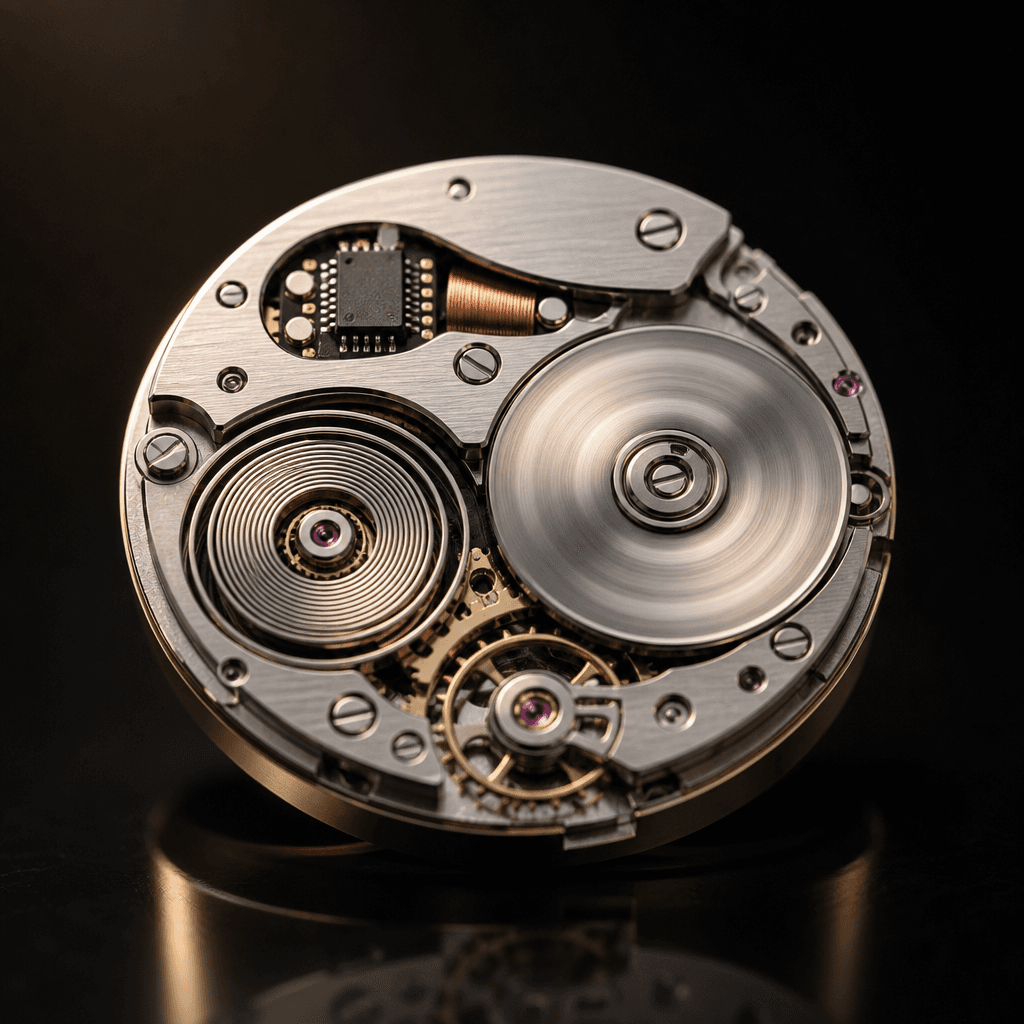
Spring Drive
A mechanical mainspring regulated with quartz precision.
 Movement
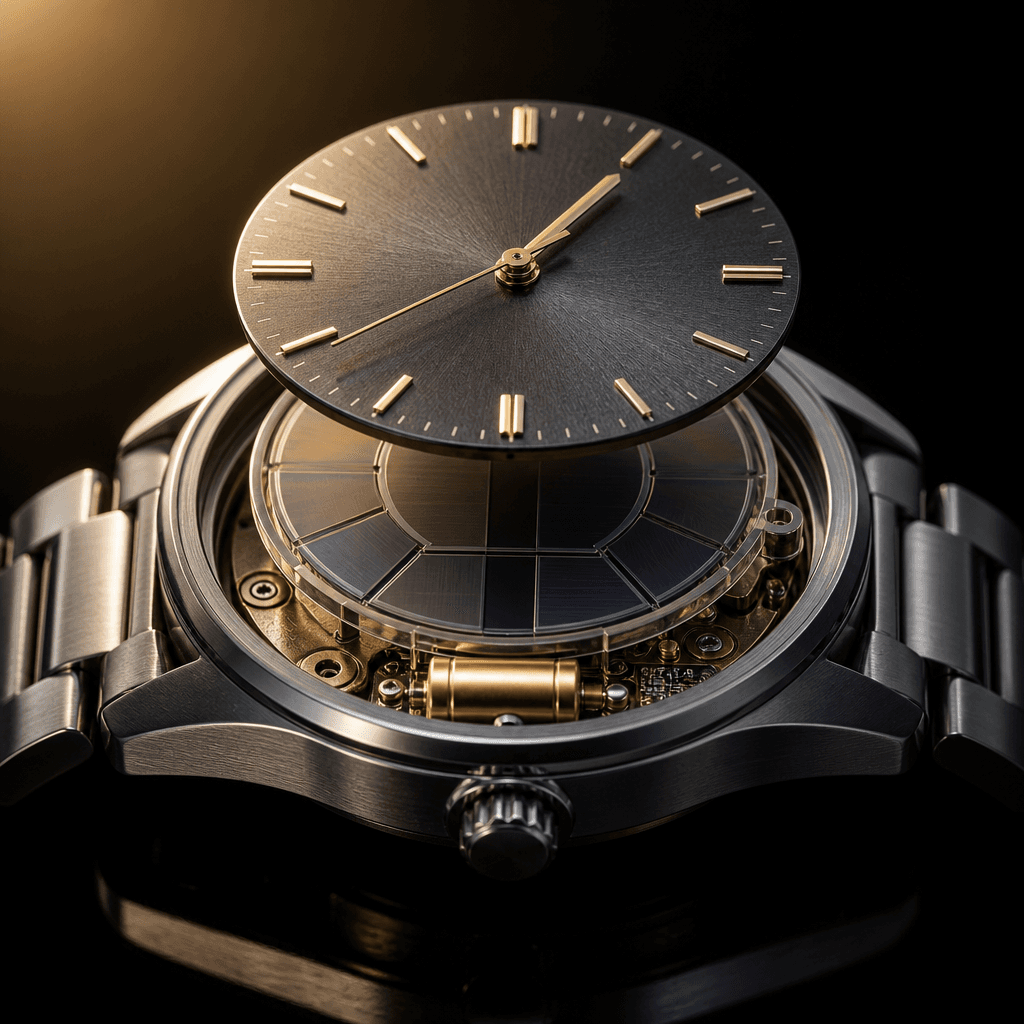
Solar (Light-Powered)
Light charges a cell that can run for months in the dark.
 Movement
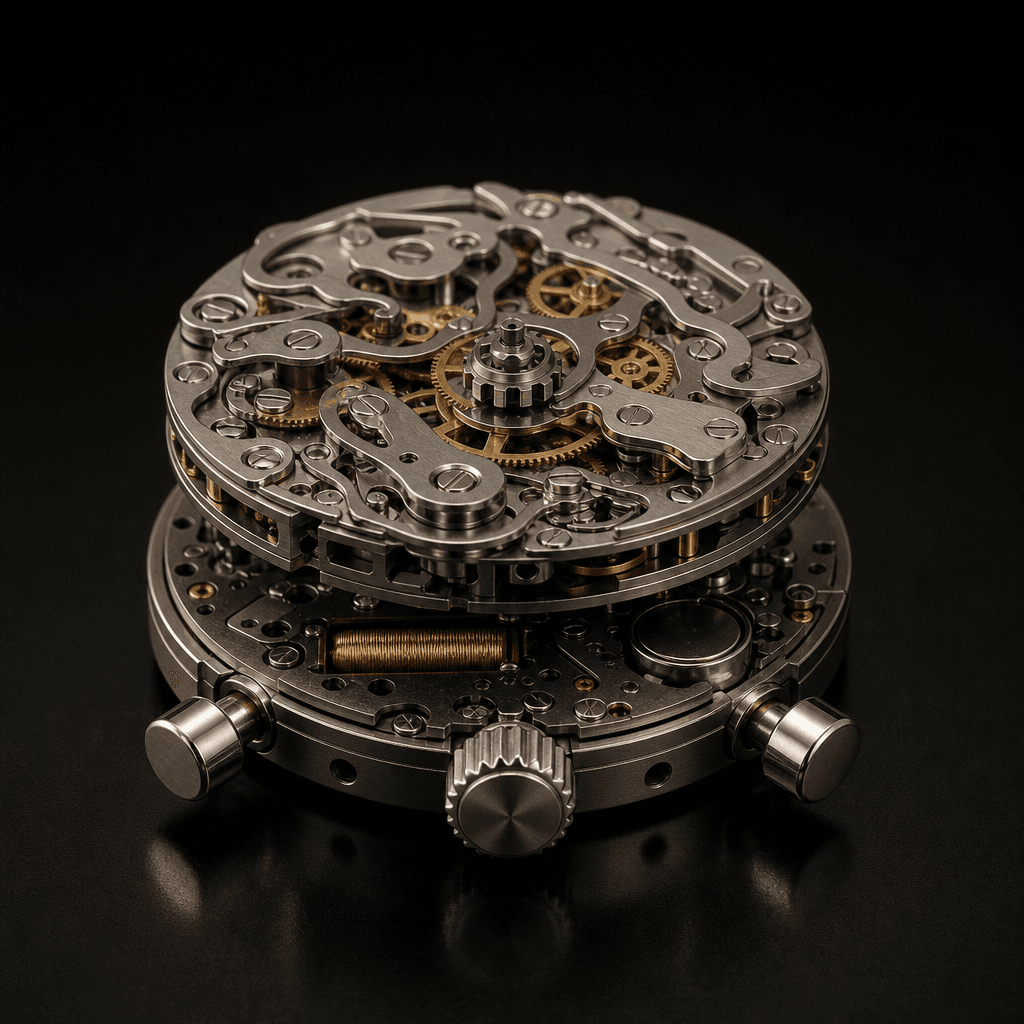
Meca-Quartz
Quartz timekeeping with a mechanical chronograph.
 Movement
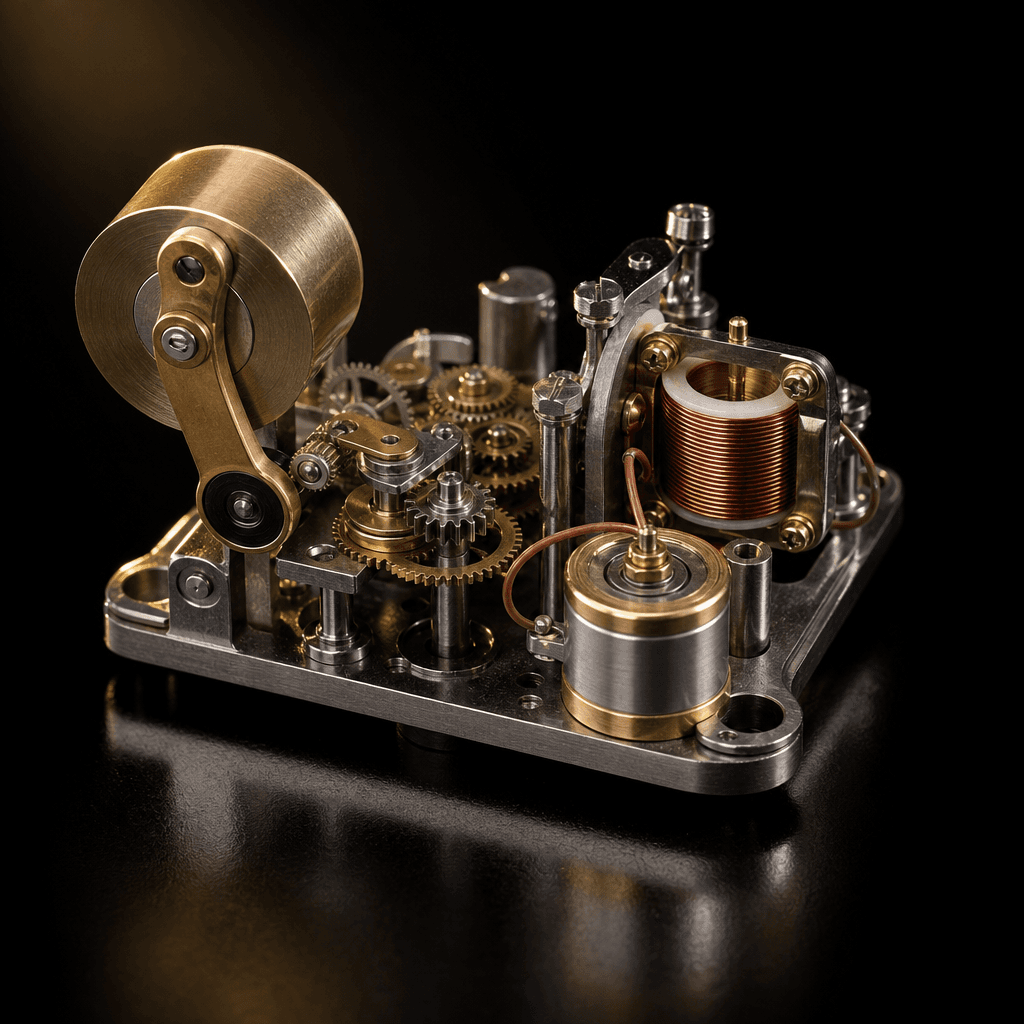
Kinetic
Wrist motion generates electricity for a quartz movement.
 Movement
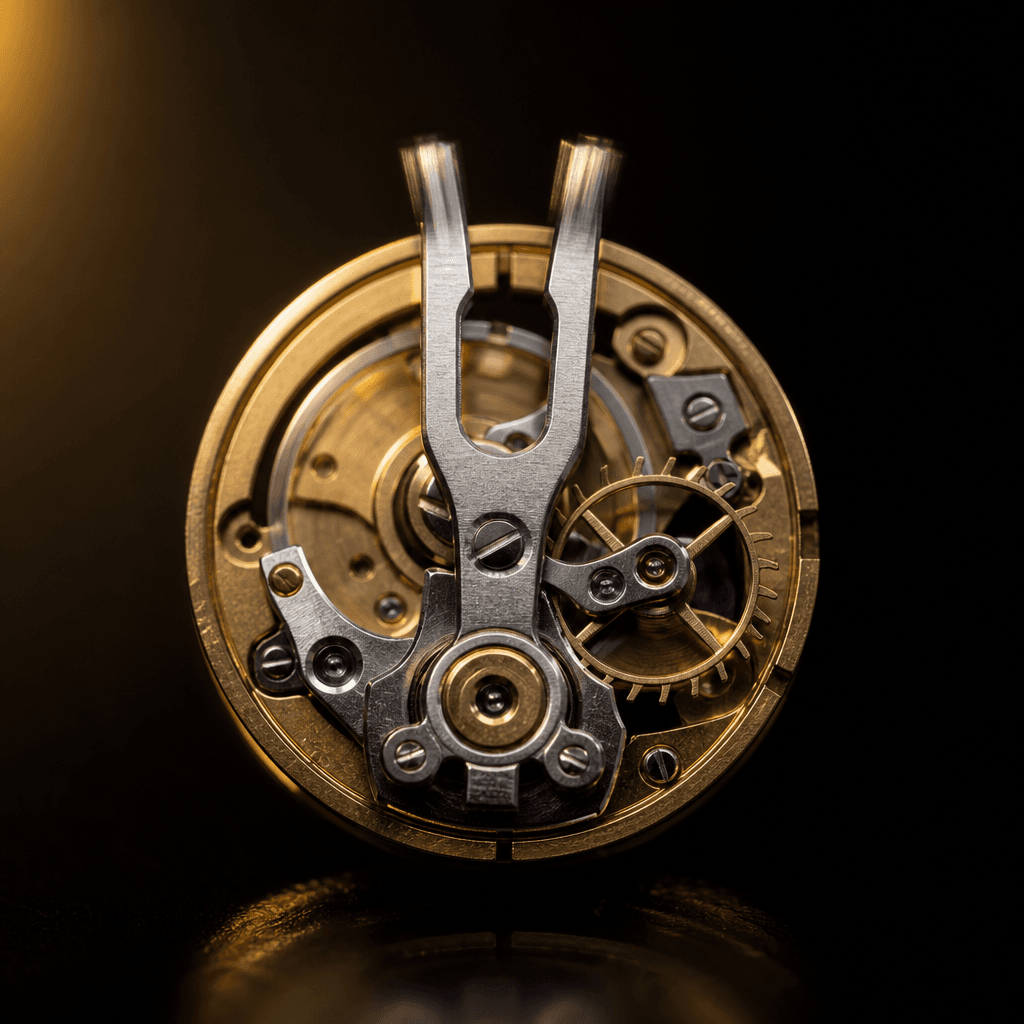
Tuning Fork (Accutron)
A humming fork instead of a ticking balance wheel.
 Movement
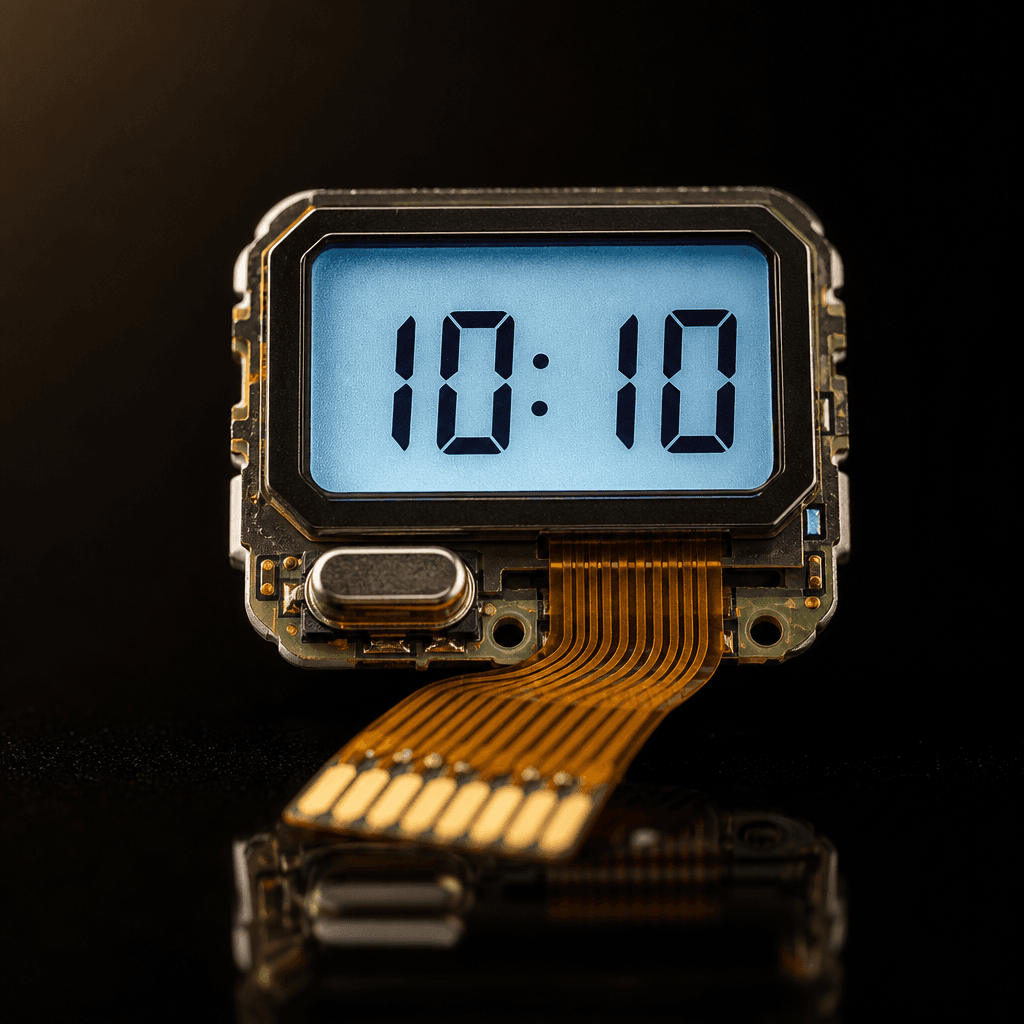
Digital (LCD/LED)
A quartz movement with a screen instead of hands.