Movement
Automatic (Self-Winding)
A rotor winds the mainspring from your wrist motion.
- Typical accuracy
- Typically −4 to +6 seconds per day; chronometer-grade to −4/+6 or better.
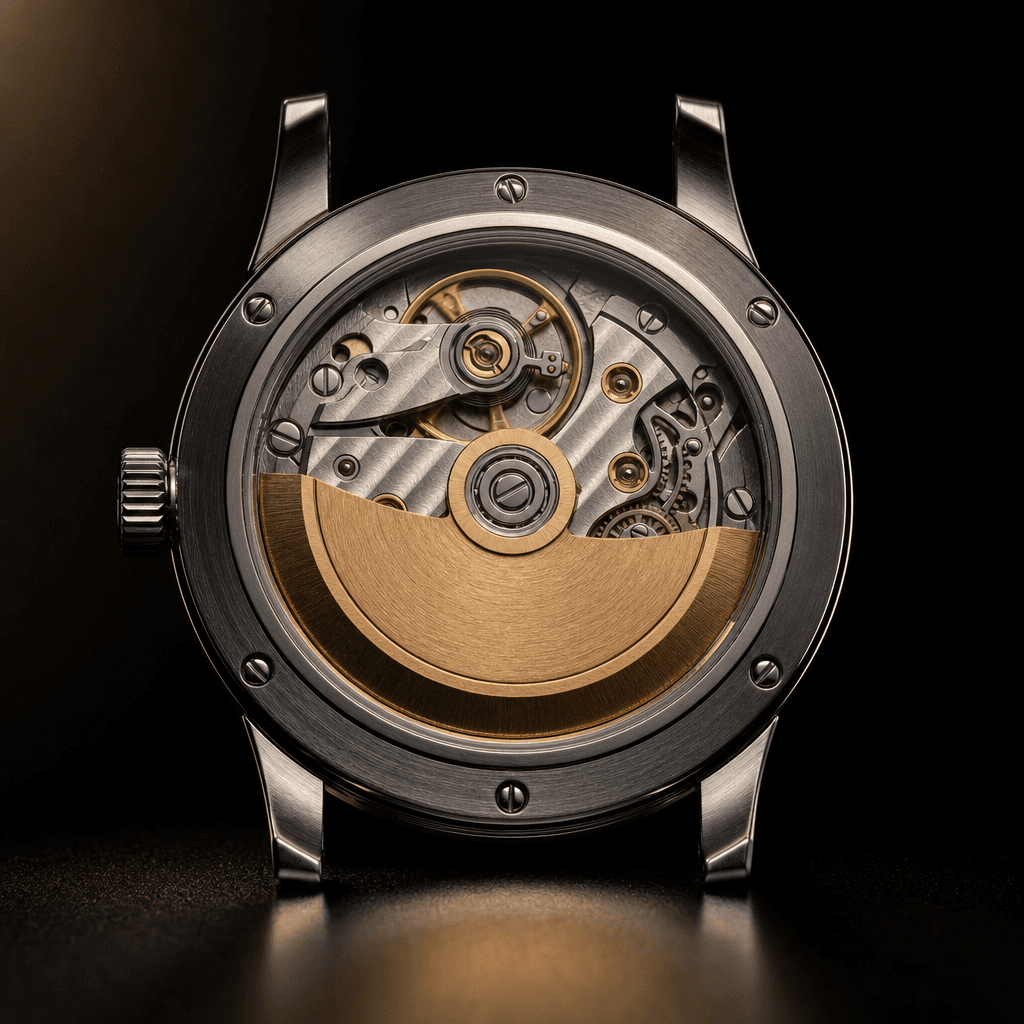
How it works
A weighted half-disc (the rotor) spins as your wrist moves, winding the mainspring through a gear train. The stored energy releases in tiny, regulated steps through the escapement, driving the hands. No battery — just motion and a spring.
Strengths
- No battery to replace
- Smooth sweeping seconds hand
- Can last generations with servicing
- Often the most collectible and valued
Trade-offs
- Less accurate than quartz (typically −4/+6 s per day)
- Stops after ~2 days off the wrist
- Needs servicing every 4–7 years
- Sensitive to shocks and magnetism
Care tips
How to keep one running well between services.
- Wear it or use a winder to keep it running
- Keep it away from strong magnets (speakers, tablet covers, MagSafe)
- Service every 4–7 years to refresh the lubricants
Keep reading
 Movement
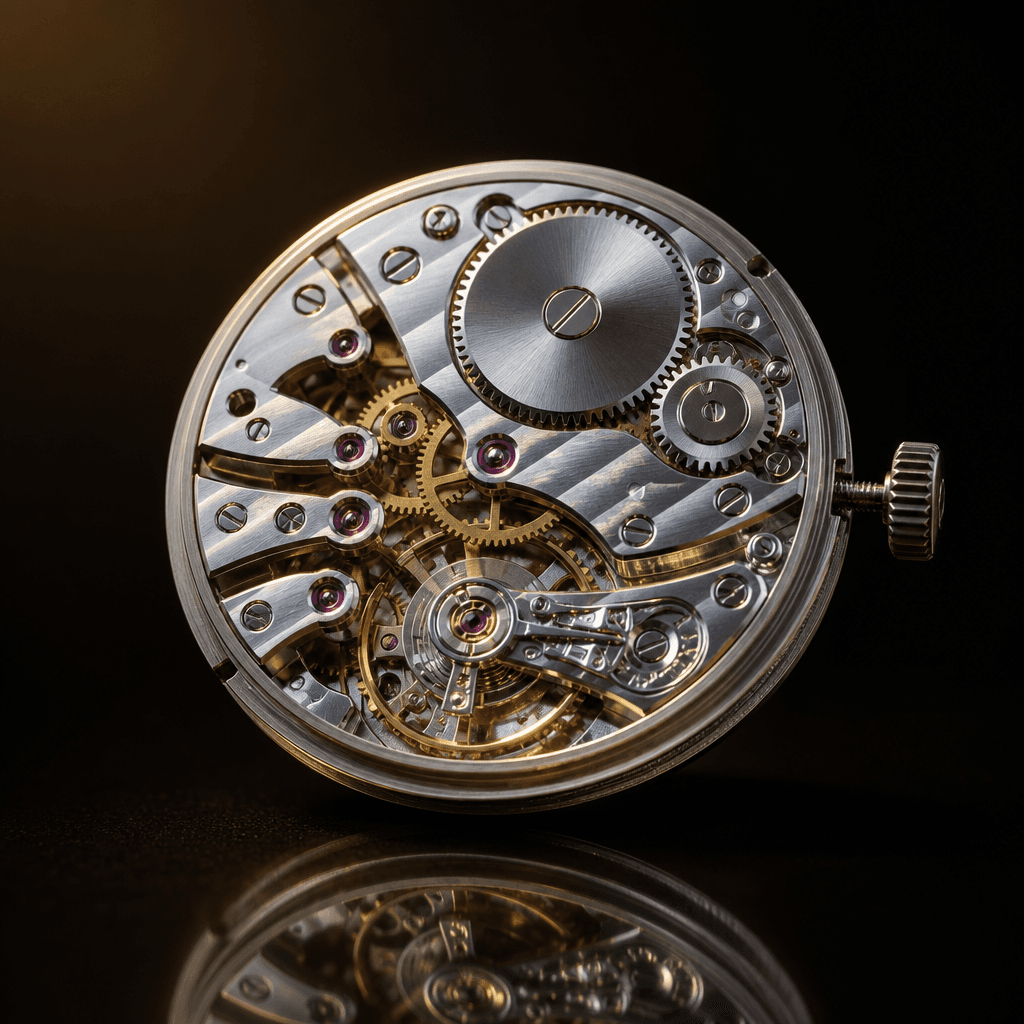
Manual (Hand-Wound)
You wind the crown; the purest mechanical experience.
 Movement
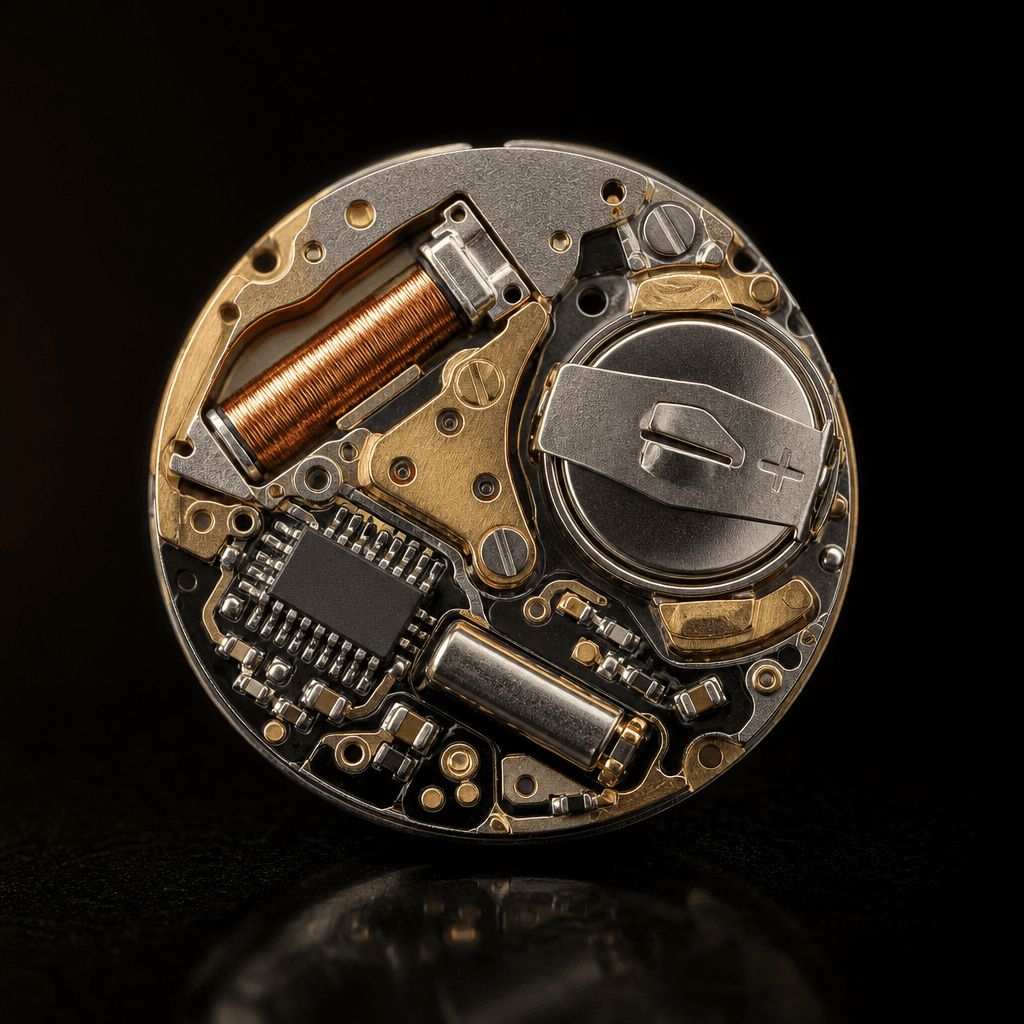
Quartz
A battery and a vibrating crystal — cheap and precise.
 Movement
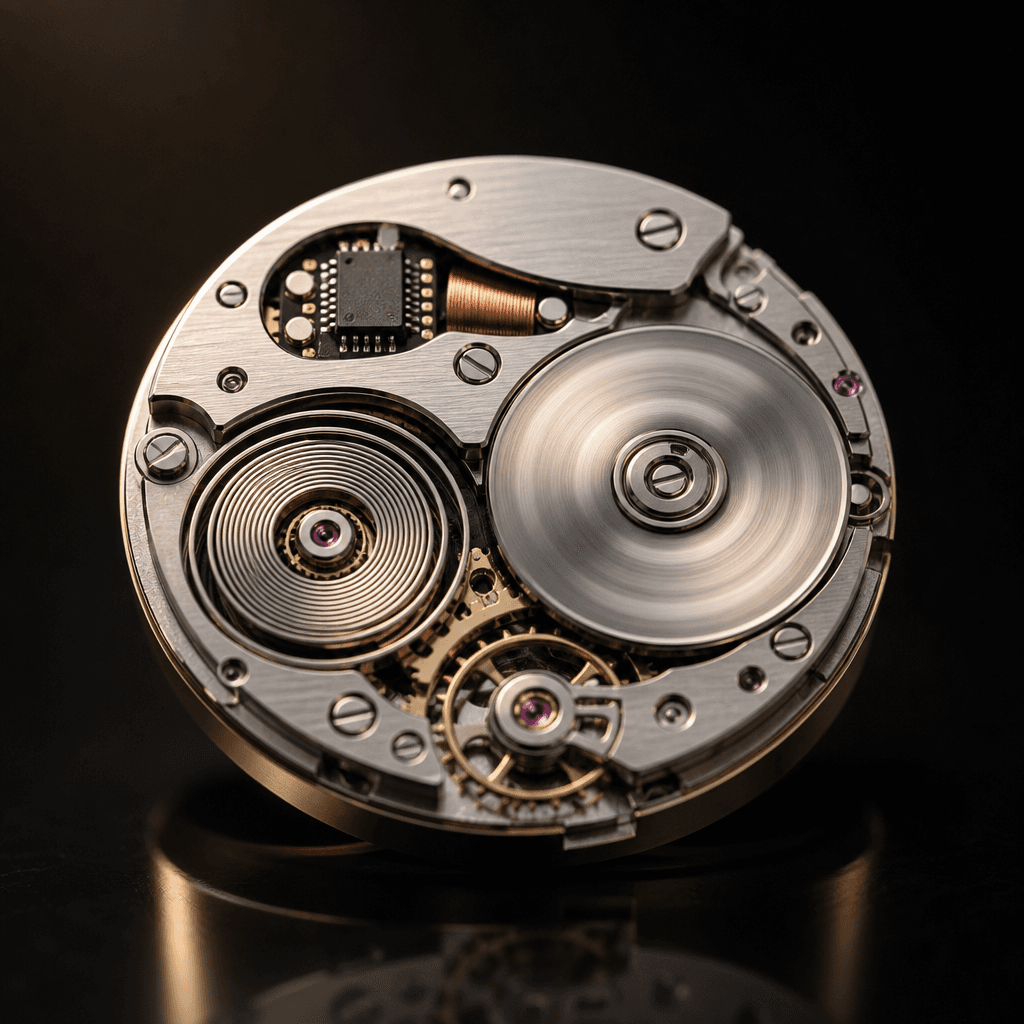
Spring Drive
A mechanical mainspring regulated with quartz precision.
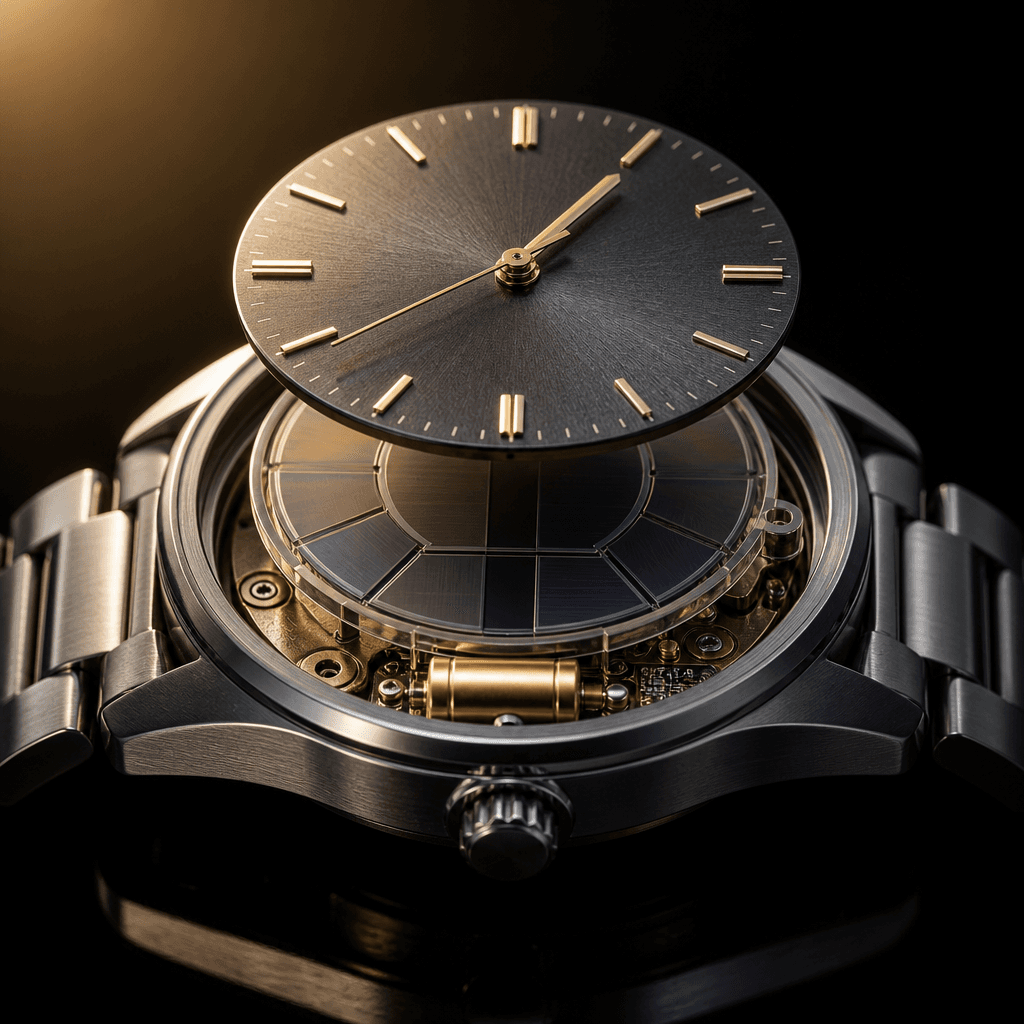 Movement
Solar (Light-Powered)
Light charges a cell that can run for months in the dark.
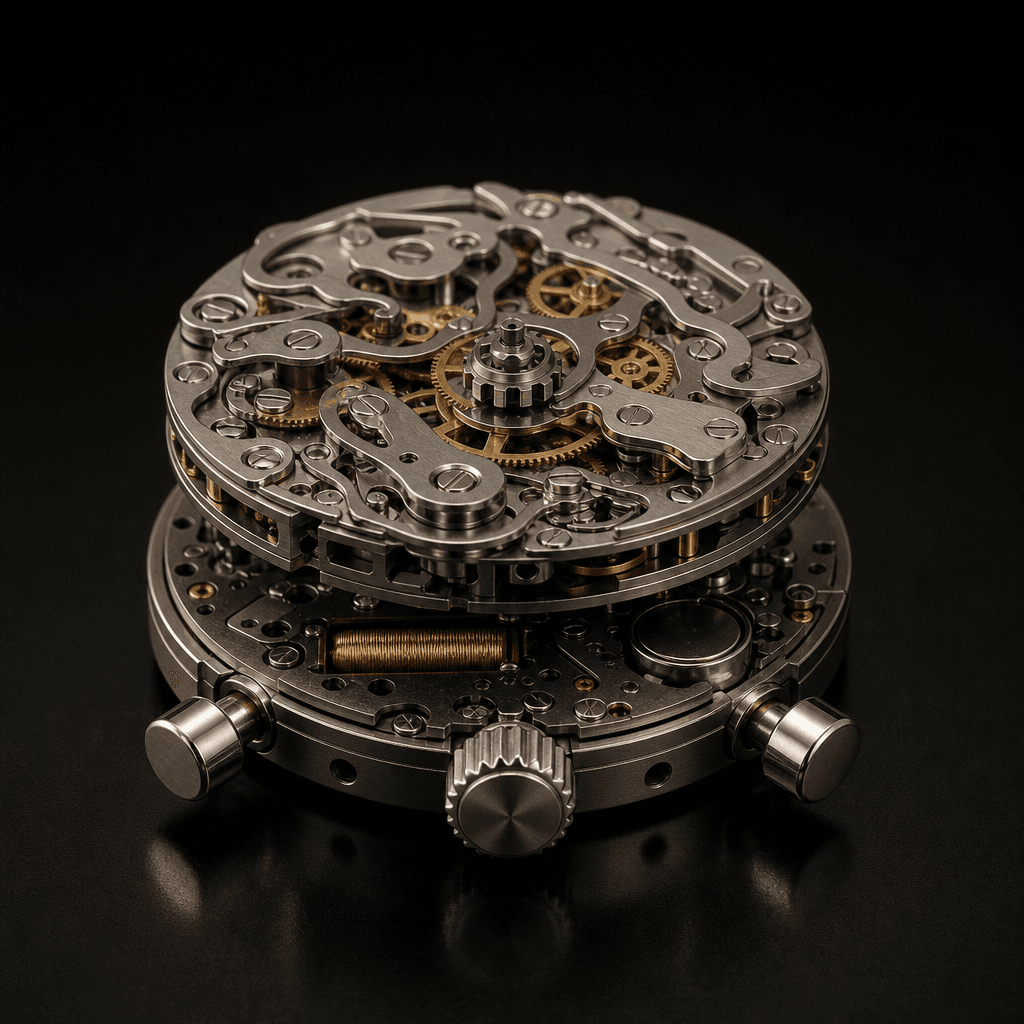 Movement
Meca-Quartz
Quartz timekeeping with a mechanical chronograph.
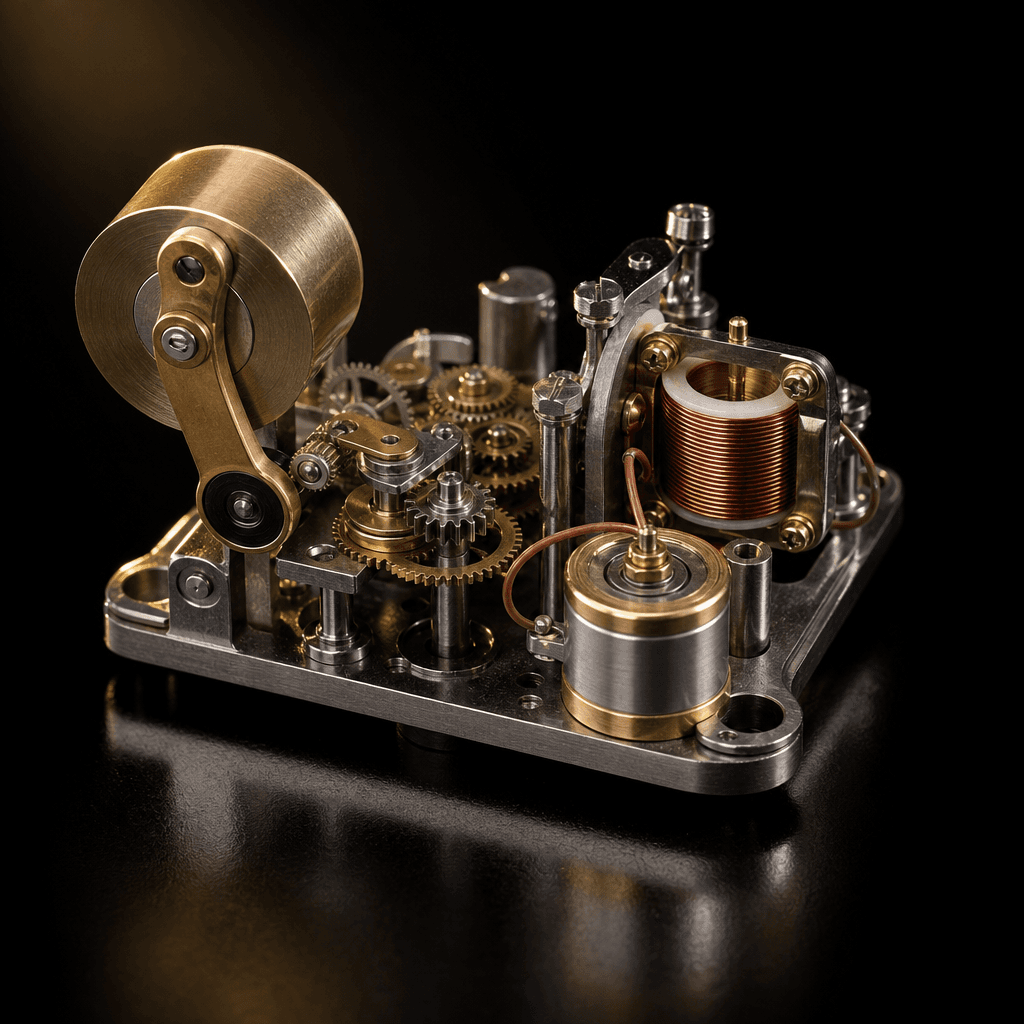 Movement
Kinetic
Wrist motion generates electricity for a quartz movement.